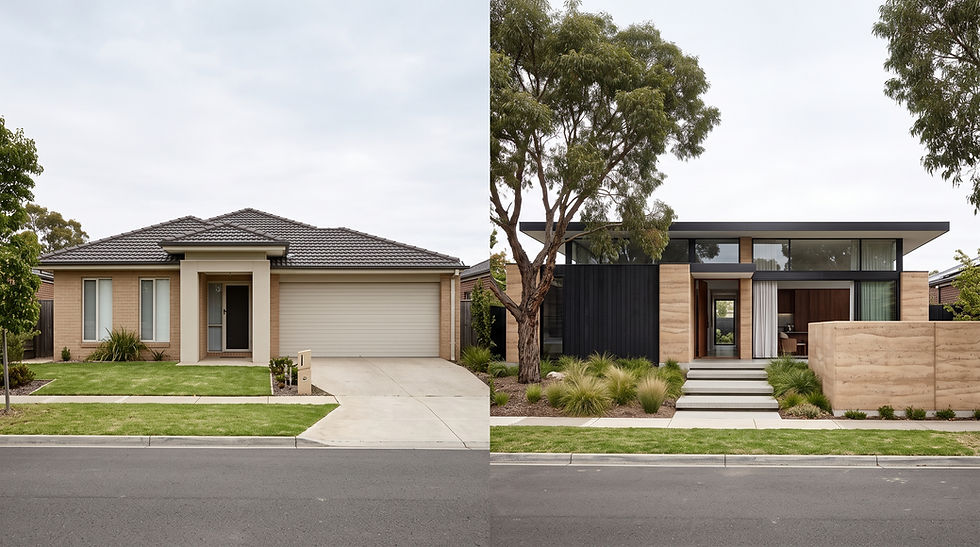
Architect vs Building Designer vs Draftsperson

Why Architects’ Fees Are Higher (and Why It Matters)
One of the most common questions homeowners ask at the start of a project is:
“Why are architects so much more expensive than draftspersons or building designers?”
It’s a fair question — especially when all three appear to provide drawings for a house. But in reality, the difference goes far beyond drawings.
This article explains why architects’ fees are higher, how architects differ from draftspersons and building designers in Victoria, and why understanding this difference can protect your project, your budget, and your peace of mind.

1. Education, Training & Professional Qualification
In Victoria, becoming a registered architect requires both academic depth and professional experience.
To legally register as an architect, a person must complete:
A Bachelor’s degree in Architecture
A Master’s degree in Architecture
A minimum of two years of supervised practical experience
A formal registration process, including examinations and interviews
Ongoing mandatory professional development every year
Only after completing both a Bachelor’s and a Master’s degree, along with registration, can someone legally use the protected title “Architect”.
By comparison:
Draftspersons typically complete a TAFE or diploma-level qualification
Building designers may hold diplomas or degrees but are not required to complete both Bachelor’s and Master’s degrees in architecture
This extended academic and professional pathway is a major reason architects bring a deeper level of design thinking, technical understanding, and risk awareness — and why their fees differ.
2. Regulation & Legal Accountability (ARBV)
Architecture is a regulated profession in Victoria.
Registered architects must be listed with the Architects Registration Board of Victoria (ARBV) and are bound by:
A strict Code of Professional Conduct
Ongoing compliance and audits
A formal complaints and disciplinary system
If an architect acts negligently or unprofessionally, they can face:
Investigation by the ARBV
Disciplinary action
Suspension or cancellation of registration
Legal consequences
This level of regulation exists to protect the public — and it is a key reason architects carry greater responsibility (and higher fees).
3. Professional Indemnity Insurance & Liability
Registered architects are required to carry professional indemnity (PI) insurance.
This insurance:
Protects clients if a design error results in financial loss
Covers risks related to compliance, coordination, and construction
Represents a significant ongoing cost for architectural practices
Draftspersons and VBA-registered building designers are not required to carry PI insurance at the same level, and in some cases may not carry it at all.
In simple terms:
Architects carry greater legal and financial liability
Clients receive greater protection and recourse
That responsibility is reflected in professional fees.
4. Draftsperson vs Building Designer vs Architect (Victoria Explained)
In Victoria, there are three commonly confused roles:
Draftsperson
Focuses on technical drawings and documentation
Usually holds a TAFE or diploma qualification
Not required to be registered with the ARBV or VBA
Limited regulatory oversight
Building Designer (VBA-Registered Building Practitioner)
Registered with the Victorian Building Authority (VBA)
Has met certain qualification and experience requirements
Can design buildings and prepare documentation for permits
Carries more responsibility than a draftsperson
Still not an architect, and not subject to ARBV regulation
Architect (ARBV-Registered)
Holds both Bachelor’s and Master’s degrees in architecture
Registered with the ARBV
Carries professional indemnity insurance
Has the highest level of design responsibility, legal accountability, and professional oversight
A VBA-registered building designer sits between a draftsperson and an architect — but the roles are not interchangeable.
5. Scope of Services: More Than Drawings
A common misconception is that architects “just draw plans”.
In reality, architects are responsible for:
Interpreting your brief, lifestyle, and long-term goals
Designing within planning controls, overlays, and council requirements
Resolving complex site and compliance issues
Coordinating consultants (structural, civil, energy, etc.)
Ensuring compliance with the National Construction Code
Managing design risk and protecting design intent
Draftspersons and building designers typically focus on documentation and have a narrower scope of involvement.
6. Design Thinking vs Drafting
Architects are trained to:
Solve complex spatial and technical problems
Balance aesthetics, functionality, cost, and constructability
Anticipate issues before they arise on site
Add value through strategic design decisions
Good architectural design can:
Reduce construction costs
Minimise variations
Improve energy efficiency
Increase long-term property value
Enhance everyday living
Design quality has a direct impact on the success of a project — not just how it looks, but how it performs over time.
7. Cost Control & Long-Term Value
While architects’ fees may be higher upfront, engaging an architect often reduces the overall cost of a project.
Architects help by:
Identifying risks early
Designing within realistic budgets
Producing clear, coordinated documentation
Reducing construction errors and variations
Lower upfront fees can sometimes lead to higher costs later through redesigns, disputes, or poor build outcomes.
8. Why You Should Always Check if Someone Is a Registered Architect
In Victoria, the title “Architect” is legally protected.
Not everyone offering “architectural services” is an architect — even if they use terms like:
Architectural designer
Building designer
Architectural consultant
Engaging a registered architect means:
They have completed both Bachelor’s and Master’s degrees
They are regulated by the ARBV
They carry professional indemnity insurance
They are legally accountable for their work
This distinction is critical for client protection.
9. How to Check an Architect’s Registration (ARBV)
Checking registration is simple and free.
Visit the Architects Registration Board of Victoria (ARBV) website
Go to “Find an Architect” or “Register Search”
Search by the individual’s name or practice name
If they appear on the register, they are a registered architect. If not, they are not legally an architect, regardless of how they describe themselves.
Final Thoughts
Architects, building designers, and draftspersons all have their place — but they are not the same.
An architect is not simply a more expensive draftsperson. They are a highly educated, regulated professional responsible for design integrity, compliance, coordination, and risk management.
When comparing fees, it’s important to compare like for like — and to understand what level of expertise, accountability, and protection you are engaging.
For many homeowners, hiring a registered architect is not a luxury — it’s a decision that brings clarity, confidence, and long-term value to one of life’s biggest investments.
Disclaimer
The information provided in this article is general in nature and is intended for informational purposes only. It does not constitute legal, financial, or professional advice.
While care has been taken to ensure the accuracy of the information at the time of writing, regulations, registration requirements, and professional obligations may change over time. Requirements may also vary depending on individual circumstances and project scope.
Before engaging any design professional, we recommend independently verifying their registration status with the relevant authority, such as the Architects Registration Board of Victoria (ARBV) or the Victorian Building Authority (VBA), and seeking appropriate professional advice specific to your project.