Should You Speak to a Builder or an Architect First When Planning Your Home?

Updated: Aug 26
When planning to build a home, one of the most common questions is:
“Should I go to a builder or architect first?”
It’s a simple question — but the answer can significantly shape the direction, quality, and overall success of your project.
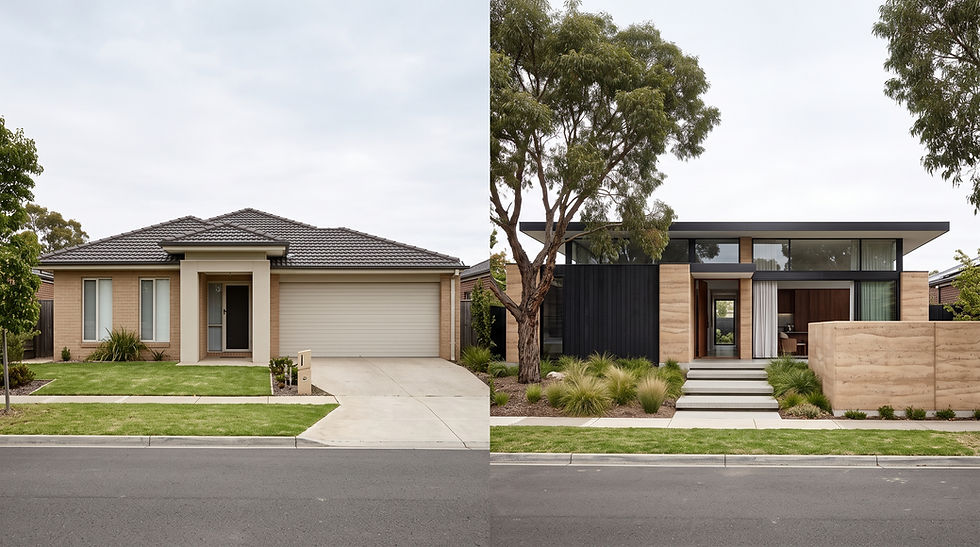
Builders are essential to delivering your home. But starting with an architect gives you something equally important — clarity, direction, and control from the very beginning.

Two Different Starting Points
Builders and architects approach your project from different angles:
A builder focuses on construction, cost, and delivery
An architect focuses on design, space, lifestyle, and long-term value
Both roles are critical — but when you engage them matters.
If you start with a builder, the process can often be guided by:
Pre-defined systems or construction methods
Early cost constraints shaping key decisions
Limited exploration of your site’s full potential
Starting with an architect allows the project to begin with:
A deeper understanding of how you want to live
A response tailored to your site
A design-led direction that can then be built efficiently
1. Design and Cost Should Evolve Together — Not Compete
One of the biggest misconceptions in residential projects is that you must either:
Design first and worry about cost later, or
Lock in a budget first and let it dictate the design
In reality, the best outcomes happen when design and cost evolve together from the very beginning.
At ENCLAVE, we approach projects with both in mind — side by side.
This means:
Every design decision is made with cost awareness
Materials and systems are considered early
The project develops within a realistic financial framework
Why This Approach Works
When design and cost are disconnected:
Projects often require redesign later
Budgets and expectations fall out of alignment
Time and money are lost resolving avoidable issues
When they are aligned from day one:
Decisions are more informed and intentional
The design remains achievable
Adjustments are strategic, not reactive
The Key Is the Right Architect
This approach depends on working with an architect who understands both:
Design quality, and
Real-world construction costs
It’s not about compromising design —it’s about balancing design and budget intelligently to get the best possible outcome within your means.
2. Your Site Deserves a Tailored Response
Every site is different:
Orientation and sunlight
Slope and levels
Neighbouring properties
Overlooking and privacy
Local council requirements
Builders often rely on standardised solutions to manage efficiency.
Architects are trained to:
Analyse these conditions
Respond carefully
Turn constraints into opportunities
This is where a home begins to feel considered, calm, and connected to its surroundings — not just built.
3. You Stay in Control of the Process
Starting with an architect gives you flexibility and control.
You are not locked into:
A specific builder
A single construction pathway
Early decisions that are difficult to reverse
Instead, you can:
Develop a clear design
Test it against your budget
Take it to multiple builders
Compare pricing with confidence
This creates transparency — and often leads to better value.
4. Better Long-Term Value
A well-designed home performs better over time.
Beyond aesthetics, an architect considers:
Natural light and orientation
Energy efficiency
Spatial flow and usability
Material longevity
These decisions influence:
Daily living experience
Ongoing running costs
Future resale value
What may seem like an upfront design investment often becomes long-term value.
5. Avoid Costly Mistakes Early
Changes during construction are one of the biggest sources of budget blowouts.
By engaging an architect early, key decisions are resolved before building begins:
Layout and spatial planning
Planning constraints
Structural considerations
Material selections
This reduces:
Variations
Delays
Unexpected costs
In many cases, it prevents issues before they arise.
So, When Should You Speak to a Builder?
Builders are an essential part of the process — just at the right stage.
A well-structured approach typically looks like:
Engage an architect early
Develop and refine the design
Align design with budget
Engage builders for accurate pricing and construction
At this point, builders can provide meaningful input and deliver the project efficiently.
Final Thoughts
The decision of who to speak to first isn’t just procedural — it shapes your entire project.
Starting with an architect allows you to:
Think clearly before building
Align design and budget from the outset
Stay in control of key decisions
Create a home that truly reflects how you want to live
At ENCLAVE Architects, we believe the best homes come from a balanced approach —where design and cost are considered together, from day one.
Disclaimer
The information in this article is general in nature and is intended to provide broad architectural and design guidance only. Every project is different, and factors such as site conditions, planning and building regulations, construction methodology, material selections, consultant requirements, market conditions and the individual project brief can significantly affect design outcomes, construction costs and feasibility.
Any references to cost, floor area, potential savings or design strategies should not be considered construction cost advice or a guarantee of a particular outcome. Project-specific advice should be obtained from appropriately qualified architects, building designers, builders, quantity surveyors and other relevant consultants before making design, financial or construction decisions.