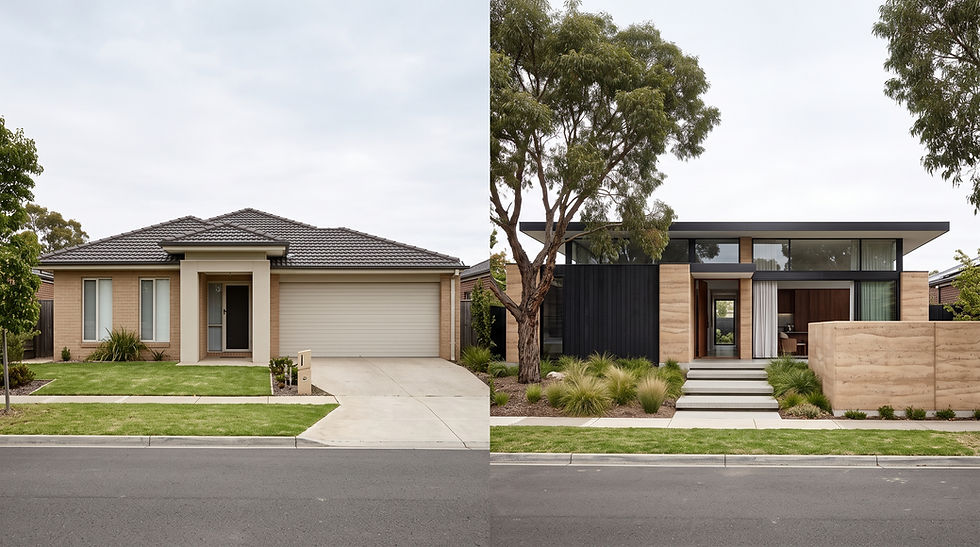
14 Practical Questions Every Homeowner Should Ask Before Hiring an Architect, Building Designer, or Draftsperson

Starting a residential project is exciting — but for many homeowners, it can also feel overwhelming.
Whether you’re building a new home or renovating an existing one, this is likely one of the largest financial and emotional investments you’ll ever make. Knowing the right questions to ask before hiring an architect can help you create clarity, avoid costly mistakes, and feel confident from the very beginning of the process.
The following questions to ask before hiring an architect, building designer, or draftsperson are based on what homeowners most commonly ask — and what they often wish they had asked earlier.

1. Are You a Registered Architect, Building Designer, or Draftsperson?
This should always be the first question.
In Victoria:
Architects are registered with the Architects Registration Board of Victoria (ARBV)
Building designers may be registered with the Victorian Building Authority (VBA)
Draftspersons may not be registered with either body
Each role carries a different level of education, regulation, accountability, and insurance. Understanding who you are engaging helps clarify the level of responsibility and protection involved in your project.
2. Do You Have Experience With Projects Like Mine?
Not all experience is the same.
Ask whether they have worked on:
Similar project sizes and budgets
Similar site conditions (sloping sites, overlays, infill lots)
Similar project types (new homes, renovations, extensions, townhouses)
Relevant experience often matters more than volume alone.
3. What Is Your Design Process From Start to Finish?
A clear process builds confidence.
Ask how the project typically moves through:
Initial briefing
Concept design
Planning approvals (if required)
Design development
Interior design
Documentation
Construction involvement
A good designer should be able to explain their process clearly and logically, so you understand what happens at each stage and when decisions are required.
4. How Involved Will I Be as the Client?
Some clients prefer to be hands-on, while others want guidance.
Clarify:
How often decisions are required
What decisions you’ll be involved in
How feedback is managed and incorporated
Clear expectations help avoid frustration for everyone involved.
5. How Are Your Fees Structured?
Fees may be structured in different ways, such as:
Fixed fees
Hourly rates
Stage-based fees
A combination of the above
Understanding how fees are calculated helps you plan and manage costs with confidence.
6. What Is Included in Your Fees — and What Is Not?
Always clarify this early.
Ask whether fees include:
Planning drawings and submissions
Consultant coordination
Authority responses
Site visits
Construction-phase involvement
Understanding inclusions and exclusions helps avoid assumptions later.
7. What Other Consultants Will Be Required?
Most residential projects require additional consultants, such as:
Structural engineers
Land surveyors
Energy assessors
Town planning consultants (in some cases)
Ask who engages and coordinates them and when they are typically involved.
8. Can You Help With Planning Permits and Council Approvals?
Planning approvals can significantly affect timelines.
Ask:
Whether a planning permit is likely required
How council processes are managed
What risks or delays may be involved
Good advice early can save months later.
9. How Do You Help Manage Budget and Construction Costs?
Design and cost are closely linked.
Ask how your designer:
Designs within realistic budgets
Responds to cost increases
Helps minimise variations during construction
This is where experience adds real value.
10. Will You Assist With Builder Selection or Tendering?
Some homeowners already have a builder; others don’t.
Ask whether they:
Recommend builders
Assist with tendering
Review builder quotes
Help compare quotes fairly
Builder selection often has a major impact on the success of a project.
11. How Involved Are You During Construction?
Not all designers remain involved once drawings are complete.
Ask whether they:
Conduct site visits
Respond to builder queries
Review shop drawings
Assist with design clarifications
Construction involvement can significantly reduce stress and mistakes.
12. What Happens if We Need to Make Changes?
Changes are normal, but they should be managed properly.
Ask:
How changes are handled
Whether changes affect fees
How variations are documented
Clear processes prevent misunderstandings.
13. How Will We Communicate Throughout the Project?
Good communication is critical.
Clarify:
Who your main point of contact will be
How often updates are provided
Preferred methods of communication
Strong communication builds trust and clarity.
14. Can I See Examples of Your Work or Speak to Past Clients?
Reviewing completed projects helps you understand:
Design quality
Attention to detail
Consistency of outcomes
Client references can also provide reassurance about how the process feels, not just how the project looks.
Final Thoughts
Designing or renovating a home is a major investment.
Asking the right questions early:
Builds confidence
Creates clarity
Reduces risk
Leads to better outcomes
Whether you engage an architect, building designer, or draftsperson, understanding who you are working with and how they operate is far more important than rushing into drawings.
At ENCLAVE Architects, we believe informed clients make better decisions — and better decisions lead to better architecture.
Disclaimer
This article is intended as general information only and does not constitute legal or professional advice. Requirements and processes may vary depending on individual circumstances. We recommend verifying registrations with the ARBV or VBA and seeking advice specific to your project.